Kharis Templeman (祁凱立)
中文姓名:祁凱立
  • Home
  • Research
  • Teaching
  • CV
  • Blog
  • Taiwan Studies Resources

The Curious Case of the Taiwan People's Party, Part 4: What LY Roll-Call Votes Miss

7/20/2025

0 Comments

 
This is Part 4; for previous posts see Part 1, Part 2, and Part 3. 
Picture
The Speaker's Podium, ready for the next battle.
To recap the argument so far: The Taiwan People's Party (TPP) controls the critical voting bloc in the Legislative Yuan, but it has not maximized the leverage that voting bloc gives it. 
  1. It has not sought to obtain offices (LY speaker or deputy speaker, or cabinet positions) for its members. 
  2. It has not sought concrete policy concessions from either the DPP or KMT in return for its support. 
  3. It has not tried to maximize its appeal to the general electorate, and it has behaved like a pan-blue party rather than a centrist one. 
​
This behavior is puzzling! 

What Is the TPP Doing? 
I have argued that the TPP is trying to bring about a partisan realignment within the pan-blue camp, away from the KMT. This is the only goal for which the TPP’s current strategy appears rational. It's an unusual strategy, but one that makes some sense given the political constraints the party faces.

Taiwan’s electoral institutions and party system present a high barrier to third-party growth. There is high party system institutionalization and politics and voting are now quite nationalized. The electoral system is permissive enough to allow small parties to gain a foothold in city councils and in the party list vote for the legislature, but they can never expand beyond small-party status unless they replace one of the Big Two. And no small party has ever succeeded in doing so in 30+ years of democratic elections.
 
So, to try to replace the KMT, the TPP needs to do two contradictory things at the same time.
  1. Convince pan-blue voters they are one of them, and in particular, to appeal to older KMT supporters while holding onto their younger base.
  2. Undermine the KMT, to change beliefs about the long-term viability of that party and convince their supporters that the TPP, not the KMT, is the future.

Now, if you were leading the TPP, how might you go about this? Toward the first goal, you'd pursue a public strategy of alignment with the KMT, especially on issues that you think make the DPP look bad. And toward the second, you'd quietly block legislation that would strengthen the KMT's grassroots or increase its popularity. 

Evidence for the first part of this strategy is obvious: Huang Kuo-chang is appearing in public regularly with the KMT, the TPP is publicly opposing the recall elections against KMT legislators, and (almost) everything controversial that has made it to a final vote in the LY has passed with joint KMT-TPP support over DPP objections. 

But what about the second? Can we find evidence of divergence of interests between the two party caucuses? This is harder to spot, because the TPP doesn't want KMT supporters to notice that it is trying to undermine the party's prospects. The TPP would rather be characterized as "marching in lockstep" with the KMT in its opposition to the DPP government, and everything else that matters to the KMT. 

But I don't think this is actually true.

Is the TPP Really Supporting Everything the KMT Wants in the LY?

Picture
Clearly, the engines and cockpit need to be reinforced.
To begin to see why this claim might be wrong, we need to talk about survivorship bias. Survivorship bias is the logical error of focusing on outcomes that survived a selection process, while overlooking those that did not. The classic example used to illustrate this form of bias comes from the Allied bombing campaign in World War II. The U.S. military did a systematic study of planes returning from bombing missions to try to understand how to improve aircraft survival while under fire. The study noted that certain areas like the wings and fuselage had more bullet holes than the rest, and recommended reinforcing these areas since they seemed to be getting hit a lot more. But this was a fallacy: a statistician, Abraham Wald, noted that the areas with the most bullet holes were places where the plane could be hit and still survive the mission. It was the other areas -- the ones that did not show much damage in surviving planes -- that were critical to surviving a bombing mission. Planes hit in the cockpit or engine simply didn't make it back, and so were not in the "sample" of planes examined.  

Now, what does the patterns of bomber survival in WWII have to do with the Taiwanese legislature? Well, there is also a selection process that occurs before bills introduced in the legislature come up for a vote. And we haven't paid adequate attention (and I include myself in this "we") to how that process might be skewing what we actually see being debated publicly, and being passed, by the TPP-KMT coalition over DPP objections. We need to consider the possibility that stuff the two pan-blue parties don't agree on never makes it to a vote. And it's possible this is happening a lot. 

​​The inference problem here is that we don't know what bills the TPP quietly blocked, because the vast majority of bills introduced in the LY don't come up for a vote. Moreover, as I noted above, the TPP doesn't generally want people to know when they disagree with the KMT on a bill. (And an important corollary: the KMT also doesn't want people to know that it is not all-powerful in the legislature. So it, too, has an incentive to play down disagreements.) But now that we have about 18 months of legislative actions to observe, there is a growing list of oddities in legislation that has passed, and just as importantly, not passed, during this term, and I think we have enough observations to discern a pattern here: the KMT is not getting blanket support from the TPP. 

For one, here are a few changes the DPP pushed through from 2016-2023 that hit KMT interests directly, and that the KMT screamed bloody murder about at the time, that have not so far been reversed. If the TPP is doing everything the KMT wants, I would expect to see reversals on some of these issues (I'll keep updating here as I come across more): 
  • ​Farmer's and Fisherman's and Irrigation Associations changed from elected to appointed leadership.
  • Pension reforms, which reduced the preferential benefits enjoyed by martial-law-era civil servants (mostly KMT supporters). 
  • Actions by the Ill-Gotten Party Assets Committee to freeze or confiscate KMT party assets.
  • [Update 2025.8.4] The Anti-Infiltration Act. Notably, the NPP under Huang Kuo-chang and Ko Wen-je separately supported passage of this act in 2019, while the KMT has been a consistent critic of it.

And here are a few controversial bills that the KMT caucus seemed to be gung-ho about that then quietly died, or ended up looking much different when they finally passed:
  • Fu Kun-chi's special infrastructure budget bill. This would have allocated at least US$60bn to build two expressways and high speed rail to Hualien -- Fu Kun-chi's constituency. (to put that in context, Taiwan's annual defense budget is less than US$20 billion.) Speaker Han Kuo-yu and Deputy Speaker Johnny Chiang co-sponsored the two most controversial bills in that package. And then...crickets. Nothing ever came of this proposal. We don't know whether this was due to internal opposition from other members of the KMT or quiet TPP opposition, but it's an interesting data point.   
  • Constitutional Court reform. Lots of changes to the court were proposed after the CC ruled against the LY oversight bill, most of them designed to limit the court's authority over the LY or paralyze it completely. But the final legislation ended up at the last moment with a different threshold of nine justices required to rule legislation unconstitutional, rather than a return to the two-thirds requirement before 2022. 
  • Central-local government revenue division bill. I'm less confident about this one, but there were some more extreme proposals put forward in the debate about changing the formula for allocation of government revenues between central and local governments. What ended up in the bill was a 60-40 percent allocation, not as extreme as some of what was reported at the time. Here's what the TPP had originally proposed.

Why Didn't the KMT Raise the Recall Threshold?! 
And finally, the real smoking gun -- the bill that clued me in to this whole shadow game between the TPP and KMT -- is the amendment to the Civil Servants Elections and Recall Act that passed in December 2024. Various KMT members floated proposals to raise the recall threshold as early as June 2024, to protect them from the prospect of mass recalls that they are, in fact, now facing down in less than a week. Isn't it strange that the KMT saw this threat coming a year ahead of time, and still failed to protect its own legislators? 

I had long assumed this increase in the recall threshold was inevitable and that the activists preparing to collect recall signatures were wasting their time, because it was not in the KMT's interest to leave their legislators vulnerable to a potent recall movement that was clearly a threat even last summer. They simply couldn't not change this threshold if they had the votes -- it would be political malpractice not to. And in December, when the bill amending the Elections and Recall Act looked like it was headed for passage, the reporting on the proposal implied that the threshold would be raised. I thought so too. 

Except it wasn't! 

Why not? Well, way back in July 2024 Ko Wen-je was asked about this proposal, and he said he didn't support changing the threshold. The KMT tried, probably repeatedly over many months, to get the TPP to vote for this, and...failed. They didn't have the votes. Which is why the KMT is now facing mass recalls that could strip them of their control of the LY as soon as July 28.

This seems like it should be a huge part of the recall elections story, no? The KMT's coalition partner left them exposed to a mass recall. And while the KMT now has to engage in a desperate rear-guard struggle to preserve their seats, the TPP doesn't have to do anything because their legislators are all from the party list tier. (As an aside, if I were one of the KMT legislators facing a recall vote, I'd be pissed right now. The TPP hung them out to dry on this issue.)    

And as for why the TPP might want to block raising the recall threshold, but not call attention to themselves as the reason? I will leave that question as an exercise for the reader...

Whither the TPP?

I've argued that the TPP is trying a different strategy to grow their party: they are trying to become the preeminent pan-blue party and replace the KMT.

Will they succeed? I don’t think so. They're missing a couple elements to pull this strategy off. 

First is talent. Right now the TPP has three names anyone has heard of: Ko Wen-je, Huang Kuo-chang, and Huang Shan-shan. Being generous, we might say Tsai Pi-ru and Kao Hung-an also have some name recognition. Beyond that? It’s a stretch. And Huang Kuo-chang is certainly not doing anything to share the spotlight with up-and-coming younger leaders. 

Second is grassroots supporters. That means more than simply an online army of fans who turn into your livestreams and like your posts on TikTok. What the DPP and KMT still have is grassroots party activists who can be mobilized to come out to rallies, to turn out to vote, and to, yes, collect signatures for recall elections. I haven't seen a whole lot of evidence the TPP has core supporters they can rely on to turn out around the island -- in Taipei, maybe, and perhaps Hsinchu, but elsewhere they are extremely weak at local levels. 

Contrast that with the DPP and, more importantly for present purposes, the KMT. I still remember clearly watching a KMT parade and rally in Taipei in January 2016, shortly before the presidential election that year. This was one of the most difficult periods in the KMT's recent history. It was the end of the Ma Ying-jeou presidency, and President Ma was deeply unpopular. The Sunflower Movement had succeeded in blocking Ma's signature cross-Strait trade agreement, the CSSTA, and the opposition stirred up by that project contributed to the KMT's sweeping defeat in the local elections in late 2014. The party then lurched from one political crisis to another over the next year. They ended up with the deep-blue firebrand Hung Hsiu-chu as their presidential candidate when everyone else declined to run, and then had to execute a late switch of candidate from Hung to party chairman Eric Chu in fall of 2015. The party's old nemesis James Soong then declared he would run (again!) as an independent candidate to give pan-blue voters a protest vote option. And at that point, everyone knew that Eric Chu was toast.  
 
And yet, on January 8, 2016, tens of thousands of KMT supporters nevertheless showed up in Taipei from all over Taiwan for an old-fashioned political parade down Roosevelt Road to Ketagalan Boulevard, to support a hopeless campaign heading for a crushing electoral defeat. Here’s a few pictures of that.
If the TPP is going to replace the KMT, it will have to convince even these diehard loyalists that the KMT’s future is hopeless. And it will need to build chapters of activists of its own.

I have always doubted Ko Wen-je is the right person for this kind of party-building work. Ko often has analogized party-building to running a business: cold, calculating, rational, and vote (profit?)-driven. That may be true for winning over swing voters. But if the only reason voters have to support you is that you're more "rational" than the next guy, what happens when they no longer believe that? What if there's another guy who comes along who offers better answers to their problems? The fans you've acquired, if they like you only because you "do the right thing," are going to abandon you when they no longer believe you have their best interests at heart. Success is easy come, easy go in this model.

There is, however, a different model of party-building in Taiwan, one that the DPP followed in its early days, which is based on identity appeals. "Our party stands for you. Our people are like you. We have suffered the same things you have. We speak the same language you have. You can trust us." Those appeals may turn some voters off...But for the DPP they also built a loyal following that has stuck with them through bad times as well as good. I just don't see the TPP doing the hard work of building those grassroots connections that can outlast any particular leader, either under Ko Wen-je or now, under Huang Kuo-chang.

Does the TPP Have a Future?: What To Look For
Putting this series of posts together has also clarified for me that the 2026 local elections are really critical for the TPP's future. Given Ko’s detention, Kao Hung-an’s suspension, and the party’s slump in the polls over the last year, they desperately need to demonstrate that they still have room to grow their electoral support. They need to develop a deeper bench of local talent – candidates who can win votes independently of the TPP’s brand and have crossover appeal. They need to run their own candidates – and win! – in some of the local mayor’s races. And they need to expand the number of seats they hold in the local councils (they won 14 last time – significant for a third party in Taiwan, but also only 1.5% of all seats.)

But the most fundamental question for the TPP in 2026 is whether to coordinate future nominations with the KMT. In 2023, Ko Wen-je rather naively assumed he could come to some kind of agreement with Eric Chu and Hou You-yi that would give him a clear path to the top of a joint presidential ticket. The spectacular way in which that agreement fell apart is a cautionary tale for the TPP. But for the party to have a chance of winning any of these offices in 2026, they still need to get the KMT to yield some nominations to TPP candidates. So the party is caught on the horns of a dilemma: cooperate and get absorbed, or don’t cooperate and throw elections to the DPP, or worse -- watch the KMT win these elections anyway and demonstrate the TPP is irrelevant. I’m not sure how they will resolve this dilemma. I’m more confident in predicting that the KMT will drive a hard bargain in any nomination negotiations, despite the TPP-KMT track record of cooperation in the LY right now, than I am in predicting the TPP's strategy in 2026.

So to wrap up, I’ll stick my neck out here and say flat out that I don’t think the TPP is going to succeed in initiating a partisan realignment away from the KMT, however they choose to approach 2026 (and 2028, for that matter). The party is much more likely to decline or collapse after the next election than to surge into second place and usher in a lasting change to Taiwan’s party system.

​But it is going to be fascinating to watch them try.
0 Comments

Taiwan Is on the Brink of a Constitutional Crisis

1/19/2025

0 Comments

 
And maybe a fiscal one, too. And no, it has nothing to do with China. 
Picture
December 20, 2024: When the cameras roll, the shoving begins...The DPP party caucus tries and fails to blockade the speaker's podium to prevent a final vote on three controversial bills. / Taipei Times
On December 20, amid shouting, shoving, fistfights, and broken furniture, Taiwan’s opposition-controlled legislature passed by a show of hands three controversial bills that threaten to kneecap its government. The first raised the threshold to recall elected officials. The second required the Constitutional Court to have a 2/3 quorum to hear constitutional cases and imposed a supermajority threshold to invalidate a law. And the third shifted the central-local revenue-sharing formula to give local governments (mostly KMT-run) 40 percent of all government revenues, up from 25 percent, at the expense of the DPP-run central government.
​
Four days later, the same opposition majority in the legislature voted down all seven of President Lai’s nominees to the Constitutional Court, leaving it with only eight justices and unable to meet the new quorum requirement for hearing a case. It is now effectively paralyzed. The DPP government has nevertheless requested that the court meet and rule anyway on whether the amendments to the Constitutional Court Act are themselves unconstitutional. This increasingly destructive partisan political conflict has put Taiwan on the brink of a constitutional crisis with no obvious way to resolve it. 

This confrontation is also taking place in a democracy that Freedom House last year ranked as the second-best in Asia, behind only Japan, and significantly above the United States and most of Europe. Taiwan's political system has proven remarkably resilient to PRC influence operations over many years, and it has a capable and effective state and vibrant economy despite its diplomatic isolation. So why is it facing a political crisis now?

A Divided Legislature and a Missed Opportunity 

Picture
February 1, 2024: Han Kuo-yu and Johnny Chiang celebrate winning both the speaker and deputy speaker positions with other KMT legislators, including Fu Kun-chi. / CNA
​The simplest answer is divided government. For the first time in 16 years (and only the second time in its democratic history), Taiwan's legislative and executive branches are controlled by different parties: the Chinese Nationalist Party or Kuomintang (KMT) and Taiwan People's Party (TPP) together hold a majority in the Legislative Yuan, and they are locked in a fierce power struggle with the Democratic Progressive Party (DPP) government.  

This conflict was not inevitable. In the January 2024 presidential and legislative elections, the DPP's Lai Ching-te (賴清德) won the presidential election but with only 40% of the vote, and the DPP lost its majority in the legislature. The KMT ended up with 52 seats (plus two blue-leaning independents), the DPP won 51, and presidential candidate Ko Wen-je's (柯文哲) centrist TPP won eight (all via the party list vote). That left no party with a majority and made the TPP the crucial swing voting bloc in the LY. In theory, the TPP could have exploited that leverage to extract significant concessions from the ruling DPP -- on policy, legislative leadership, or cabinet positions. But instead, negotiations between the DPP and TPP went nowhere, and President Lai missed his chance to head off the last year of partisan warfare.   

The formation of battle lines first became apparent on February 1, when the new legislature was seated. Its first order of business was to elect a speaker and deputy speaker. Curiously, the TPP  ultimately decided not to support either of the major party nominees -- the party's eight legislators voted for TPP member Huang Shan-shan (黃珊珊) in the first round, and abstained in the second.  As a result, the KMT's Han Kuo-yu (韓國瑜) won the speaker's race, and KMT legislator Johnny Chiang (江啟臣) was elected as his deputy. Despite providing crucial help to the KMT, the TPP did not manage to win even the deputy speaker as the price for their support. Nor did they strike a deal with the DPP, either, although that should have secured at least one of the leadership positions for the party. Given that the TPP held the crucial votes that could have denied control of the legislature to either major party, this outcome seems like a major missed opportunity for both them and the DPP. 

I've heard competing explanations for this bargaining failure. One story is that the refusal came from the DPP side -- ruling party legislators were engaged in quiet conversations with the TPP about a possible power-sharing deal, but Lai Ching-te intervened to stop the negotiations. Reporting at the time suggested that the TPP's price for cooperation in the run-up to February 1 was for the DPP to support Huang Shan-shan for speaker -- a price the DPP was apparently not willing to pay, but which in hindsight they probably should have. That interpretation is also consistent with the public comments offered by party caucus whip Ker Chien-ming (柯建銘) that "A DPP-TPP partnership is only possible if the TPP voluntarily comes to us."​So maybe this was a strategic mistake by the DPP caucus (and ultimately, Lai himself), and they are suffering the consequences. 

But another possibility is that the TPP was just never seriously interested in cooperating with the DPP no matter what they offered -- even before  Ko Wen-je's detention in a corruption investigation several months later turbocharged the TPP's animosity toward the DPP government. Although the KMT-TPP negotiations for a joint presidential ticket broke down in spectacular public fashion in November 2023, the two parties did still enter into a pre-election coalition for the legislative races and even campaigned together, so perhaps TPP leaders had already made up their minds to team up with the KMT after the elections, too, and there really was no chance the DPP could have enticed them to defect.  

Whatever the reason, ever since the new legislature was seated on February 1, the TPP has consistently chosen to act as the KMT's junior partner and supported the opposition party's confrontational approach to the DPP government. And as the partisan divide has hardened, it has also transformed into an inter-branch conflict between the KMT-TPP majority in the legislature and the DPP in the executive. The partisan maneuvering that has followed has escalated over the last year to a level of open political warfare that is posing a severe test for Taiwan's democratic institutions. And it is a test they are failing.

Read More
0 Comments

Taiwan's 2022 Local Elections: Previewing the Campaign (I)

8/10/2022

0 Comments

 
Picture'bout that time again: campaign billboards from September 2018.


Taiwan's local elections will be held this year on Saturday, November 26, the date set by the Central Election Commission. Altogether, nine different types of offices are up for election:
  • (1) Mayors and (2) city councilors in centrally-administered municipalities (直轄市市長,市議員) for Taipei, Kaohsiung, New Taipei City, Taichung, Tainan, and Taoyuan);
  • (3) Executives and (4) councilors in counties and county-level municipalities (縣/省轄市長,縣/市議員);
  • (5) Township and town heads and (6) councilors (鄉/鎮長,鄉/鎮議員); 
  • (7) Village and ward heads (村/里長).
  • (8) Indigenous "self-governing" district heads and (9) representatives (自治區長,區代表). 

Since 2014, these elections have all been held concurrently on a four-year cycle. The local elections in 2022 are the only island-wide ones to be held between the 2020 and 2024 general elections for president and the legislature. That makes these something like midterm elections in the United States: in addition to deciding who governs across all of Taiwan's localities, they also are an important bellwether for trends in party politics. In 2014, the DPP flipped seven of the county and city executives, providing the first concrete indication that it could surpass the KMT and sweep to victory in 2016. In 2018, the KMT returned the favor, flipping nine local mayors including an astonishing upset victory by Han Kuo-yu in Kaohsiung; Han's victory set off a politically volatile period in Taiwan politics that concluded only with Tsai Ing-wen's equally astonishing comeback and emphatic reelection in January 2020. 

In an important shift, this time around both major parties have mostly done away with the party member votes and polling primaries that they had used over the past several election cycles to choose their nominees for city and county executives. Instead, the party chair --Tsai Ing-wen for the DPP, Eric Chu for the KMT -- is playing a decisive role in "negotiating" the nominees in each locality. (As this post from Nathan Batto details, both major parties have become more skeptical about the value of using polls to decide nominees after the 2020 election cycle.) The DPP has had considerable success using this method of negotiation in the past, but the KMT has typically struggled to work out side deals in the same way and suffered lots of intra-party splits as a result. A key concern for both, then, will be keeping disgruntled party members who were denied a nomination from running anyway as independents, or not campaigning to elect the party's official candidates. 

Now that the candidates for most of these races have been chosen, I am going to keep notes here on the nominees for each executive race, along with whatever other tidbits might be relevant, and try to give some context for what to expect. To keep this manageable, I've broken this discussion into three parts. Today's post has an overview of the highest-profile races in the six special municipalities (直轄市): Taipei, New Taipei, Taoyuan, Taichung, Tainan, and Kaohsiung. Later I'll break down the county-level executive races in north and central Taiwan, and then follow with the south, east, and offshore islands.

Update 8.27. I've added in a rough estimate of the partisan leaning of each locality. Following the Partisan Voting Index (PVI) developed by the Cook Political Report for elections in the United States, I've called this the Taiwan Partisan Voting Index (T-PVI). To calculate T-PVI, I averaged the DPP presidential vote share in each jurisdiction over the last two presidential elections (in 2016 and 2020), then took the difference between the national and local vote share. B+1 means the city or county is one point bluer (i.e. less favorable to the DPP) than the national electorate. G+1 means it is one point greener (more favorable to the DPP.) By this measure, the "bluest" locality in Taiwan is Lienchiang County, at B+38, and the "greenest" is Tainan at G+11. Of Taiwan's 22 localities, 14 are bluer than average, 7 are greener, and one (Changhua County) is even. So, in a national political environment where the blue and green camps are running even, the blue side should be favored to win 14 localities to the green side's 7.

Update 9.20. The latest TFOP poll shows Tsai Ing-wen's approval rating dropping to 43.8% in September, the lowest monthly rating since June 2021, and near the lowest point of her second term. The national environment for the DPP doesn't look as favorable as it did two months ago.

Update 10.26. October TFOP poll is out and shows Tsai Ing-wen's approval rating bouncing back up to 51.2%, and generic identification with the DPP jumping up from 22.4% to 33.5%. That increase might (?) be related to the attention on the CCP 20th Party Congress, where Xi Jinping secured a third term as party secretary and stacked the Standing Committee of the Politburo with his own loyalists. Regardless, that's a big improvement for the DPP in the last month before the elections. 


Taipei - 台北市
Picture
Picture
Picture
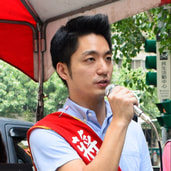
KMT: Nominated Chiang Wan-an (蔣萬安) on May 25.
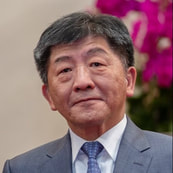
DPP: Nominated Chen Shih-chung (陳時中) on July 10.
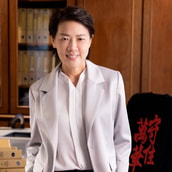
Others: Deputy mayor Huang Shan-shan (黃珊珊) declared as an independent candidate on August 28. Former Tainan County magistrate Su Huan-chih (蘇煥) announced on July 29 he's running as an independent. 8 others also registered by the September 2 deadline. 
T-PVI: B+2
Notes:
  • Chiang is a 2nd-term legislator representing Taipei 3, and the son of John Chang --> Chiang (章孝嚴 --> 蔣孝嚴), who has claimed to be an illegitimate child of Chiang Ching-kuo and in the 2000s changed the family name to make the claim explicit. Chiang Wan-an is 43 -- young by KMT standards -- and, given his father's long career in KMT politics and ostensible connection to CCK, is KMT royalty. His father held the same district from 2008-2012. 
  • Chiang has twice won tough races for the legislature in Taipei 3, 47-38-12% in 2016, and 51-46% in 2020, while running well ahead of the KMT presidential ticket; Tsai Ing-wen carried the district with 52% of the vote in 2016, and 53.4% in 2020. 
  • Chen headed the Ministry of Health and Welfare and also the Central Epidemic Command Center (CECC) during the pandemic. He became a household name through daily press conferences leading Taiwan's COVID response, but he has never before run for elected office.
  • Incumbent Taipei mayor Ko Wen-je (柯文哲) is term-limited out. Ko won this race in 2014 with the DPP's backing. In 2018, he barely won a three-way contest by less than 4000 votes when the DPP instead nominated its own candidate, Yao Wen-chih (姚文智).
  • Ko appears to want his deputy mayor Huang Shan-shan (黃珊珊) to run as a candidate of the TPP. She has publicly expressed interest in running, although she hasn't joined the party (she's still a PFP member) and hasn't yet announced.
  • Su Huan-chih (蘇煥智), who was the DPP magistrate of Tainan County from 2001-2010, has also registered to run. He ran for party chair in 2012, losing to Su Tseng-chang. Since then he's been marginalized within the party and has become a critic of Tsai Ing-wen and the DPP leadership. He left the party and ran for mayor in Tainan in 2018 as an independent, but won only 4.1% of the vote there. 
  • Update 8.28: Huang Shan-shan has officially declared she's in the race. Taiwan media are now calling this a "tripod" (三腳督) election.  
  • Update 9.15: Su Huan-chih complains that TV networks are focusing on only the top three candidates and ignoring his campaign. He says he will sue the National Communications Commission for not forcing news media to cover the candidates "fairly," citing Articles 49 and 104 of the Civil Servants Election and Recall Act. The NCC (rightly in my view) responds by saying they're not going to dictate how networks should cover the campaigns. For background on the NCC, see here. For more on the regulation of elections in Taiwan, see this working paper.   
Polls:
  • 2022.6.24: TVBS poll of Taipei mayor options. Data here show Huang Shan-shan pulling more support from the pan-green than pan-blue camp: only 62% of DPP partisans favor Chen Shih-chung and 22% favor Huang Shan-shan,  while 86% of KMT partisans favor Chiang Wan-an and only 9% favor Huang. For NPP partisans (only 3% of sample), 39% favor Huang,  28% favor Chen, and 27% favor Chiang. 
  • 2022.8.22-26: TVBS poll taken just before Huang Shan-shan enters the race. Chiang Wan-an leads with 36%, Huang (!) is second with 26%, and Chen is third at 23%. The poll also finds ~50% of respondents have a favorable impression of Chiang and Huang, with Chen well back at only 29%, and 52% unfavorable. 
  • 2022.8.31-9.3: Liberty Times poll taken just after Huang enters the race. Good illustration of "house effects" here: LTN is a green paper, and their poll shows Chen leading Chiang and Huang, 30-23-21%, in contrast to TVBS's much "bluer" results. Unfortunate that LTN, unlike TVBS, does not put up the full read-out of questions and methodology. I'll note the result here since it's a paper of record, but caveat emptor...
  • 2022.9.13-17: RWNews online poll shows a virtual tie, with Chiang at 35.2%, Chen at 35.0%, and Huang at 24.8%.  
  • 2022.9.29-30: TVBS poll finds Chiang still in lead: 40% to Chen's 22%, and Huang's 23%. Notable that Huang is not only viable but also potentially ahead of Chen. The partisan breakdown in this poll shows Huang still pulling about 20% of DPP and 42% of NPP, but only 7% of KMT partisans. Chiang appears to be keeping KMT voters firmly behind him.
  • 2022.10.4-5: ETToday poll finds Chiang in lead, 40% to Chen's 27%, with Huang slightly back at 23%. Given polling margin of error, this is entirely consistent with the earlier TVBS polls of the race.
  • 2022.10.5-6: My-Formosa poll finds Huang rising since the last time they polled this to overtake Chen, with Chiang still in the lead: 29.6%, to 28.1% for Huang, and 27.8% for Chen. Still a true three-cornered race. The results here are quite detailed and, as this writeup notes, show better favorability ratings for Huang and Chiang than Chen. 
  • 2022.10.27-29: TVBS poll shows Chiang still leading at 37% to Chen's 27%, and Huang in the rear at 21%. Some clear divergence from other polls in the last month that show Huang moving up.
  • 2022.11.1-5: Another poll shows Huang losing ground. RWNews online poll finds Chiang at 36%, Chen at 33%, and Huang at 28%. Some speculation in the accompanying article that partisans are drifting back to their respective blue and green camps, and swing voters are abandoning Huang to vote strategically for one of the other two.   
Rating: Leans KMT. Given his family background and relative youth, Chiang is the kind of candidate who can unite the party's fractious wings and appeal to the old guard of the KMT without alienating light blue and swing voters. Chen Shih-chung looked formidable as of a year ago but has seen his approval ratings decline as Taiwan has shifted away from a zero-COVID strategy. More relevant is that he's completely untested in electoral politics. A national poll from TPOF in July found more Taiwanese opposed (40.2%) than supported (37.6%) his decision to run for mayor.

It's hard to say what effect Huang would have on the race -- the TPP under Ko has moved toward the bluer end of the political spectrum, so my prior before seeing any polls was that her presence would hurt Chiang more. But Ko Wen-je also won two terms as mayor by appealing to young, green-leaning and independent voters; if Huang is able to draw support from these same blocs, as some polls are showing she might, perhaps it's Chen Shih-chung who is hurt more. At this point, with Huang not even formally in the race yet, my guess is ¯\_(ツ)_/¯.

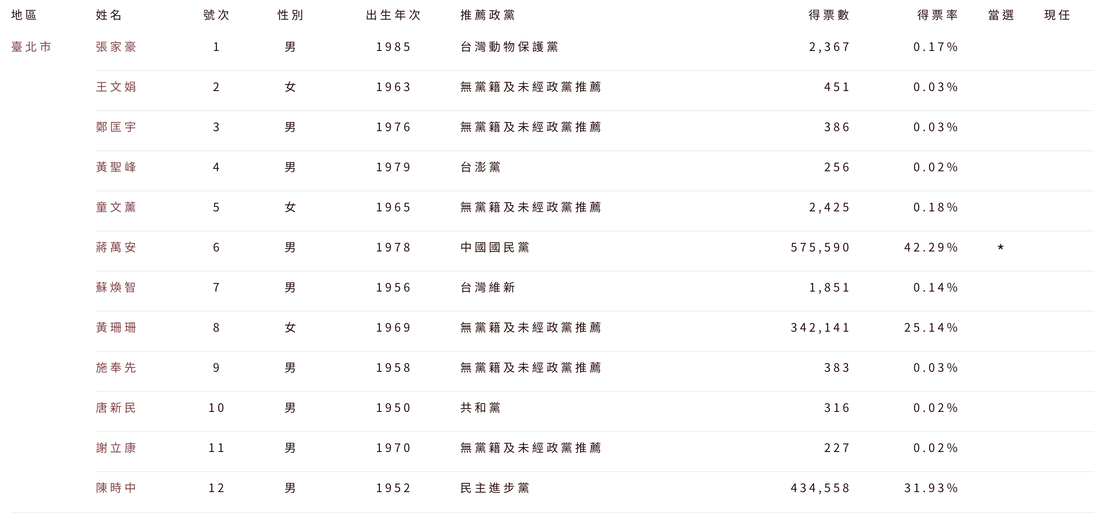
Result: KMT gain. Chiang Wan-an wins, 42.3-32.0-25.1%. CEC official results are here. 
Picture

New Taipei - 新北市

Picture
Picture
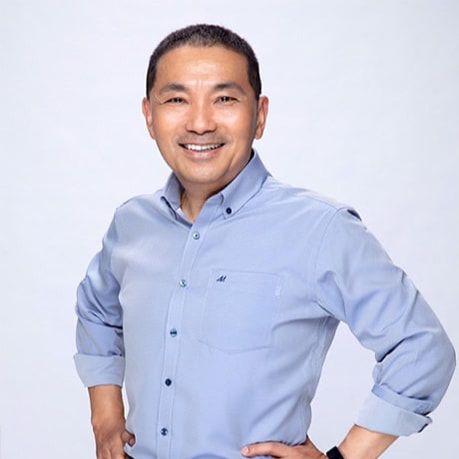
KMT: Renominated incumbent mayor Hou You-yi (sometimes spelled Hou Yu-yih 侯友宜). 
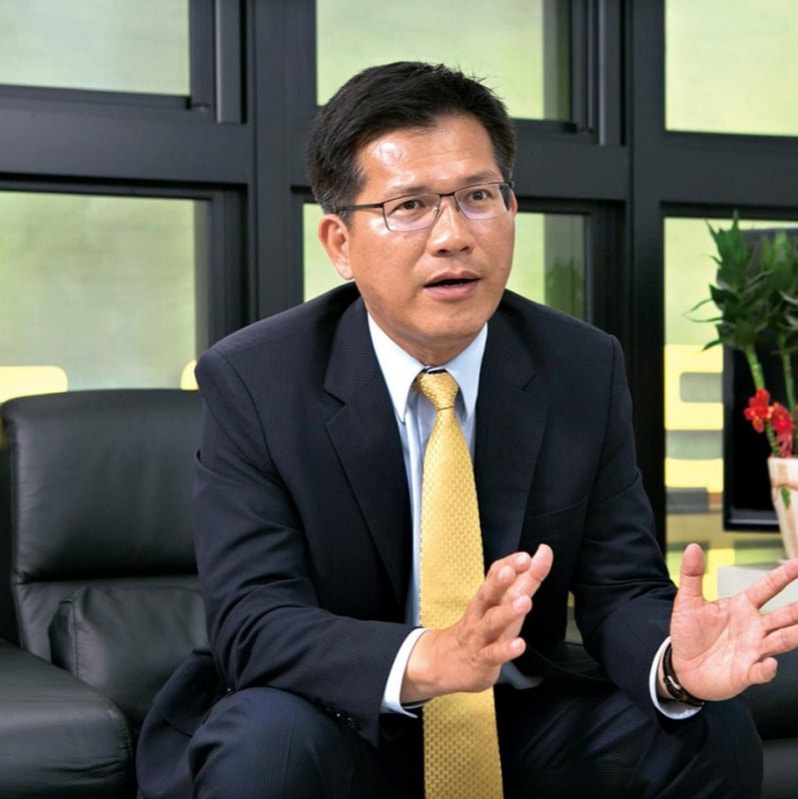
DPP: Nominated Lin Chia-lung (林佳龍) on July 10. 
Others: None.
T-PVI: B+2
Notes: 
  • Hou has consistently polled among the most popular of Taiwan's local mayors over the past four years, and looks well-positioned to win re-election. He also looks like the strongest candidate the KMT could run in the 2024 presidential election; the outcome here could go a long way toward determining whether Hou actually declares for that race next year.
  • Lin was mayor of Taichung for one term, then after being defeated for reelection in 2018 became the Minister of Transport and Communications in the Tsai administration. He resigned from that office in April 2021 after a Taroko Express train derailed in Hualien, killing 49 people.    
  • The DPP took a long time to select a candidate here. Legislator Lo Chih-cheng announced on July 3 that he had been asked to run but was going to turn down the nomination because the party had delayed the announcement for too long. 
  • ​New Taipei is the only special municipality the DPP has never won; the current premier Su Tseng-chang was the last member of the party to win an election here, way back in 2001 when it was still Taipei County. It is now Taiwan's most populous jurisdiction, with over four million people. 
Polls:
  • 2022.9.13-17: RWNews online poll shows Hou leading Lin, 58-36%. 
  • 2022.9.21-23: Liberty Times finds Hou leading Lin 52-22%. The usual complaints about lack of transparency in LTN's methodology apply here (e.g. how'd they weight their sample?); even so, coming from a polling outfit with a consistently green house effect, that's a huge lead for Hou.
  • 2022.10.14-17:  ETToday poll shows Hou leading Lin 55-32%. Not a whole lot of movement in this one; partisans sticking with their camp's candidate, and Hou winning all the rest.  
Rating: Likely KMT. Hou is a popular incumbent running against a recycled DPP candidate with no previous base in the city. He should win comfortably. A defeat for Hou here would signal absolute disaster for the KMT's fortunes. Conversely, if Hou wins big here while KMT candidates falter everywhere else, it's going to be very hard for the KMT not to nominate him for president. To me the results in Xinbei, not Taipei, will hold the greatest national political implications. 

​Result: KMT hold. Hou You-yi wins 62.4-37.6%. 

Picture

Taoyuan - 桃園市

Picture
Picture
Picture
Picture
KMT: Nominated Simon Chang (Chang San-cheng 張善政), the party's 2020 VP candidate and former premier for a brief period at the end of the Ma administration. 
DPP: Nominated Lin Chih-chien (林智堅), the incumbent mayor of Hsinchu City; Lin withdrew from the race on August 12, and the DPP announced legislator Cheng Yun-peng (鄭運鵬) would run instead.  
Others: Lai Hsiang-ling (賴香伶), a TPP party-list legislator, is also running. Former DPP legislator Cheng Pao-ching (鄭寶清) declared on August 27. No others. 
T-PVI: B+4
Notes: 
  • Popular incumbent Cheng Wen-tsan (鄭文燦) of the DPP is term-limited out. He's a potential candidate for president in 2024. 
  • Both major parties nominated surprise candidates here, and both are now politically damaged. Chang was hand-picked by party chairman Eric Chu, apparently without consultation with local party power-brokers or legislators in the city who were blindsided by the decision. Chu also ignored strident appeals from Lo Chih-chiang, a former Ma administration spokesman and Taipei city councilor, who resigned his councilor seat and publicly declared he was running after Chu told him that he was not going to be nominated. 
  • On the DPP side, the party dithered for a while before announcing that Lin, who is term-limited out in nearby Hsinchu City, would parachute in to run here. That seemed to be a safe (if uninspired) choice, and a way to help Lin (who is relatively young, at 47) keep his career in local politics going. But then some intrepid opponent researchers dug up credible evidence that Lin had plagiarized both of his master's theses, the first at Chung Hua University in 2008, and the second at National Taiwan University in 2017, submitted when he was already mayor of Hsinchu. 
  • The pan-blue media has relentlessly hammered on these accusations, partly because the KMT's own candidate in the Kaohsiung by-election in 2020 to replace Han Kuo-yu, Li Mei-jhen (李眉蓁), was also accused of plagiarism and had to renounce her MA degree. It doesn't exactly help the DPP that Lin's thesis advisor was Chen Ming-tong, now the director-general of the National Security Bureau in the Tsai administration. 
  • A twist here is that none of the three candidates has much previous connection to Taoyuan (all three have had to relocate their household registration to the city after entering the race). That may not matter much since many voters are also new to Taoyuan -- the city has grown more than any other municipality over the last decade and is now more populous than Taipei.  
  • Update 8.12: Lin Chih-chien withdrew from the race on 8.12; the DPP immediately announced legislator Cheng Yun-peng (鄭運鵬) would replace him. Cheng is the DPP's party caucus secretary in the Legislative Yuan and represents Taoyuan 1. He's won twice in a competitive district: 47-44% in 2016, and 46-43% in 2020. 
  • Update 8.27: Another bad development here for the DPP: the former DPP legislator Cheng Pao-ching (鄭寶清) has announced he'll run as an independent for Taoyuan mayor. Part of his justification is that Cheng Yun-peng showed bad judgement by staunchly defending Lin in the thesis scandal. Cheng Pao-ching represented Taoyuan 4 from 2016-20 (a seat he won by only 160 votes), then narrowly lost reelection to current KMT legislator Wan Mei-ling (萬美玲) in 2020.
  • Update 9.2: Now Simon Chang is facing his own plagiarism charges, although the context is quite different. Chang worked at the computer manufacturer Acer from 2007-09, and he led a research team that got a large grant (~US$1.9 million) from the Council of Agriculture (awarded toward the end of the Chen Shui-bian administration -- so this was not a political handout from the KMT government that followed, although it's sometimes being characterized that way) to write a series of reports on enhancing e-commerce for Taiwan's agricultural sector. The published collection contains many passages that were copied without proper citation. 
Polls: 
  • 2022.8.15-16: TVBS poll finds Chang leading Cheng Yun-peng and Lai Hsiang-ling, 39-28-8%, with 25% undecided. 
  • 2022.8.23-25: ETToday poll shows Chang leading Cheng Yun-peng, 39-26%, with Lai at 11%. 
  • 2022.9.1-9.8: TVBS poll shows Chang leading the pack again with 36%, despite the COA report news breaking at the beginning of this survey period; Cheng Yun-peng has 27%, Cheng Pao-ching 8%, and Lai at only 5%. The Cheng-on-Cheng intra-DPP split looks bad for the party's chances here. The TPP's Lai apparently hasn't gotten any traction so far despite the face-plants by both major parties.
  • 2022.9.14-16: Liberty Times poll (again, methodology caveats aside) finds Cheng Yun-peng in the lead, barely, over Chang: 29-25%, with 7% for Cheng Pao-ching, and 5% for Lai. 35% of those polled were undecided. Take the blue and green pollster results together and they suggest a two-man race but with a lot of voters up for grabs. 
  • 2022.10.16-20: TVBS polls Taoyuan again, finds the race almost unchanged. Chang is holding his lead, 38-27% over Cheng Yun-peng, with Cheng Pao-ching at 6%, and Lai at 5%. 24% undecided.
  • 2022.10.25-29: RWNews online poll shows Simon Chang in the lead over Cheng Yun-peng 46-41%. Compared to their previous polls, voters seem to be abandoning both Cheng Pao-ching and Lai Hsiang-ling and shifting toward one of the top two. A straight-up green-vs-blue race is better for the DPP, since they've got a very popular incumbent mayor and Taoyuan has trended green in recent years. But Cheng Yun-peng still appears to be behind.  
Rating: Toss-up. The KMT's nomination process here was Not Great; they passed over two Taoyuan legislators to nominate Chang, and it's going to be a struggle for the party to get all the local KMT politicos to line up behind him. But the DPP's decision to nominate Lin is also not looking so hot now, either. Lin is a newcomer to Taoyuan, too, and the plagiarism accusations may also be taking a toll on his appeal -- the most recent news is that an NTU committee found the accusations credible and has recommended his degree be rescinded. Given the stumbles in both blue and green camps, Lai Hsiang-ling of the centrist TPP could actually have a shot here, or at least a chance to play spoiler. 
Update 8.12: At this point, replacing Lin with Cheng probably helps the DPP. At the least, Cheng is from Taoyuan, and the switch happened early enough that he should be able to run a competitive campaign. The controversy over Lin's plagiarism cases was becoming a huge distraction for the party.  
​Update 8.27: Cheng Pao-ching's entry into the race complicates what has already become a difficult election for the DPP here. With the TPP's Lai not getting much traction in polls, Chang San-cheng now appears to have the edge.  
Update 10.26: Leans KMT. A month out from the election, and Simon Chang keeps holding on to a significant lead in polls, although well short of 50%. The TPP's Lai hasn't made any headway, so this is trending in the opposite direction from Hsinchu City with the KMT the likely beneficiary of strategic voting, while Cheng Pao-ching appears to be pulling enough of the vote to doom Cheng Yun-peng. Rating change to Leans KMT.   

Result: KMT gain. Simon Chang wins 52.0-40.0%. 

Picture

Taichung - 台中市

Picture
Picture
KMT: Renominated incumbent mayor Lu Shiow-yen (盧秀燕).
DPP: Nominated legislator and deputy LY speaker Tsai Chi-chang (蔡其昌) on April 27.
Others: A third candidate, Chen Mei-fei (陳美妃) registered on the last day to run as an independent.
T-PVI: B+1
Notes:
  • Lu was previously a legislator (and a rival of former KMT chair and Taichung legislator Johnny Chiang 江啟臣), who barely edged out Chiang for the party's nomination here in 2018, then won a surprisingly large victory over Lin Chia-lung in the 2018 general election. Her approval ratings have lagged toward the bottom of all mayors around Taiwan, but she remains a formidable candidate--this TVBS poll (admittedly a blue news outlet with a consistently strong house effect in its polls) shows her with a 55-22% lead over Tsai at the end of June.
  • Tsai has represented Taichung's 1st district since 2012, and became deputy speaker in 2016. He is close to a generic replacement-level DPP candidate but could probably win if it's a strong DPP year.
  • Taichung has been a microcosm of national vote patterns over the last several election cycles. Lin Chia-lung won here in 2014 57-43%, and then Lu won it back for the KMT in 2018, also 57-43%. In between, Tsai Ing-wen won 45% of the vote in Taichung in 2012, 55% of the vote in 2016, and 57% in 2020: very close to her overall performance in each of those elections.
  • Update 9.2. The independent candidate here, Chen Mei-fei, is unusual: she is a political novice (政治素人) not backed by any political group, and she apparently used her own personal savings to pay the NT$1.5 million deposit (about US$48,000 at current exchange rates). The Civil Servants Election and Recall Act (Article 32) requires that candidates must obtain ≥ 10% of the winning vote share in order to have their deposits refunded after the election. So, Chen risks forfeiting this registration deposit unless she wins ≥5% of the vote.  
Polls: 
  • 2022.9.8-14: ETToday poll shows Lu leading Tsai 54-33%. 
  • 2022.9.13-15: Formosa News with a detailed poll on the Taichung race. Among many findings here, Lu leads Tsai 59-20%. Also asks a more generic question about whether to switch parties or stick with KMT leader: that is in KMT's favor by a smaller margin, 54-25%. 
  • 2022.9.22-26: TISR (thrilled to see them back in the polling business) has a new high-quality poll out on Taichung. It shows Lu leading Tsai 50-20% (!). Yikes. Lu's trust and approval ratings are over 70% in this poll. If that's close to accurate, she's going to be hard to beat. 
Rating: Leans KMT. This is another race to watch as a bellwether for national trends. As the incumbent, Lu starts out with some advantages, but she's not Hou: her personal appeal and networks aren't going to carry her to victory in a down year. My prior here is that the result will be driven by national trends rather than local issues and candidate quality. If it's a pro-DPP election nationally, Lu is in trouble. If it's not, she probably wins.
Update 10.26: Likely KMT. A month out from Election Day and this race hasn't moved much. Lu is looking much more popular, and Tsai worse, than I expected in August. Polls keep showing this race to be more like the KMT's version of Tainan or Kaohsiung than a swing city. Rating change to Likely KMT. 

Result: KMT hold. Lu Shiow-yen wins 59.3-38.9%. 

Picture

Tainan - 台南市

Picture
Picture
Picture
KMT: Nominated city councilor Hsieh Lung-chieh (謝龍介) on March 23. 
DPP: Renominated incumbent Huang Wei-che (黃偉哲) (sometimes spelled Huang Wei-cher). 
Others: Hsu Chung-hsin (許忠信), a former TSU legislator, has entered the race as an independent. Three others, including 2018 candidate Lin Yi-feng (林義豐).
​T-PVI: G+11
Notes: 
  • The KMT has never won here since Tainan City and County were merged into a special municipality in 2010. Ma Ying-jeou actually carried Tainan City in 2008 (isn't that amazing?), but since the merger with deep green Tainan County, KMT candidates face a near-hopeless task trying to compete here. 
  • Even so, Huang Wei-che had an unexpectedly close race on his hands in 2018. Although he was the DPP's official nominee in a deep green city, four independent candidates pulled almost 30 percent of the vote, and he won with only 38% support. Huang appears to have been caught up in pan-green infighting in Tainan, which has been unusually public and acrimonious for several years now.  
  • The 32.4% the previous KMT candidate got here in 2018 in a strongly anti-DPP year is probably an absolute ceiling for the party. For the KMT to win in Tainan now looks like it would require a perfect split of the vote among green candidates, or supporting a DPP factional leader as their nominee. If there's one place where it makes sense for the KMT to forego nominating anyone at all and trying instead to back an anti-DPP independent, Tainan is it.
Polls: 
  • 2022.9.23-29: ETToday poll shows Huang leading Hsieh, 50-29%. Everyone else is under 5%. 
  • 2022.10.18-22: RWNews online poll (see Chiayi City poll section for more details) has Huang ahead but not by a lot: 44% to Hsieh's 36%. Nobody else is polling more than 5%. For an incumbent mayor in a deep green city, Huang is coming in well below expectations in this poll. 
Rating: Safe DPP. Huang's renomination by the DPP should ensure his election even if his Tainan rivals remain disgruntled and independents pull some of the pan-green vote away from him. 

​Result: DPP hold. Huang wins 48.8-43.6%. 

Picture

Kaohsiung - 高雄市

Picture
Picture
KMT: ​Nominated former legislator Ko Chih-en (柯志恩) on June 29.  
DPP: Renominated incumbent mayor Chen Chi-mai (陳其邁). 
Others: Two independent candidates.
T-PVI: G+6
Notes:   
  • Ko is a faculty member at Tamkang University in Tamsui, New Taipei. Her father Ko Wen-fu (柯文福) was magistrate of Pingtung County from 1973-1981, so she comes from a political family. In 2016, she was ranked second on the KMT's party list, ensuring her a seat for the 2016-2020 term. [correction 9.23]: In 2020 she ran for the LY in New Taipei 7, losing 46-40% to Lo Chih-cheng, then returned to teaching. She has also headed the KMT's National Policy Foundation. She moved her household registration from New Taipei to Kaohsiung for this election. 
  • Chen Chi-mai has already had a long career in the DPP, serving as a legislator, acting mayor of Kaohsiung, EY spokesman, and deputy secretary-general of the presidential office. His shocking loss to Han Kuo-yu in 2018 did not ultimately set back his political ambitions much; he was instead elevated to the central government where he served as vice premier before returning to contest the by-election after Han's recall in June 2020. 
  • Chen is the son of Chen Che-nan (陳哲男), a KMT-turned-DPP legislator in the 1990s who later served as a close aide to Chen Shui-bian in the Presidential Office. After Chen Shui-bian left office, Chen Che-nan was convicted and served three years in prison on bribery charges.     
Polls: 
  • 2022.9.28-30:  ETToday poll shows Chen leading Ko 54-31%. Within the range of expectations but I'm a bit surprised Ko is polling that well. Perhaps she's more appealing to pan-blue voters than I thought. 
Rating: Safe DPP. Han Kuo-yu pulled off a miracle by winning in Kaohsiung in 2018--a feat that nobody thought was possible in a city that's been a DPP bastion for more than two decades. But the "Han craze" is much diminished now, since he lost the 2020 presidential election and was then recalled by Kaohsiung voters in June 2020. Chen Chi-mai easily won the subsequent by-election and is well-placed for reelection. 

​Result: DPP hold. Chen Chi-mai wins 58.1-40.2% 

Picture

Part II covers county-level executive races in north and central Taiwan. Part III covers the south, east, and offshore islands. Part IV offers some concluding thoughts.  
0 Comments

China's Military Incursions Around Taiwan Aren't a Sign of Imminent Attack

10/21/2020

0 Comments

 
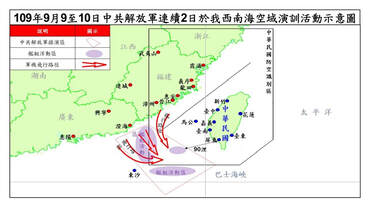
PictureTaiwan Ministry of National Defense figure illustrating PLA incursions into Taiwan's southwestern ADIZ on September 9-10, 2020.
China's recent military bravado in the Taiwan Strait represents the end state of a failed strategy

The drums of war are growing louder in the Taiwan Strait. In the last month, at least 50 People’s Liberation Army (PLA) aircraft have entered Taiwan’s airspace. The volume of threatening language directed at Taiwan from sources in China, both official and unofficial, has reached a crescendo, and the headlines in the news grow more alarmingeach month. In the United States, mainstream foreign policy voices are now openly debating whether the U.S. should abandon strategic ambiguity and openly commit to defend Taiwan in the case of an attack — an idea advocated not so long ago by only a radical fringe.

​But these dire headlines are misleading: Beijing is not gearing up for an attack on Taiwan. It still has neither the capacity to launch a successful full-scale invasion, nor the motive to risk a conflict with the United States. In reality, the increasingly bellicose language coming from China is a sign of weakness, not strength, and a cover for the failure of its own Taiwan policy. Having thrown away most of its non-military leverage in a fruitless effort to compel Taiwan President Tsai Ing-wen to endorse its one China principle, Beijing has now been reduced to counter-productive saber-rattling to express its discontent at U.S. arms sales and high-level diplomatic visits, while Taiwan races to strengthen its own defenses and reorient its economy away from overdependence on mainland China. In short, Xi Jinping’s approach to the “Taiwan issue” has turned into a strategic fiasco — one that may take years for Beijing to recover from...


The rest of this commentary appears at The Diplomat.
0 Comments

    RSS Feed

    About Me

    I am a political scientist with research interests in democratization, elections and election management, parties and party system development, one-party dominance, and the links between domestic politics and external security issues. My regional expertise is in East Asia, with special focus on Taiwan.

    Posting on Bluesky @kharist.bsky.social

    Archives

    November 2025
    October 2025
    September 2025
    August 2025
    July 2025
    June 2025
    April 2025
    February 2025
    January 2025
    November 2024
    October 2024
    May 2024
    March 2024
    January 2024
    December 2023
    November 2023
    October 2023
    August 2023
    May 2023
    April 2023
    March 2023
    February 2023
    January 2023
    December 2022
    November 2022
    October 2022
    September 2022
    August 2022
    June 2022
    May 2022
    April 2022
    March 2022
    February 2022
    January 2022
    December 2021
    March 2021
    February 2021
    December 2020
    October 2020
    September 2020
    August 2020
    July 2020
    June 2020
    September 2019
    August 2019
    November 2018
    August 2018
    June 2018
    February 2018
    January 2018
    October 2017
    August 2017
    December 2016
    November 2016
    September 2016
    August 2016
    July 2016
    March 2016
    February 2016
    January 2016
    December 2015
    November 2015
    October 2015
    September 2015
    July 2015
    June 2015
    May 2015
    March 2015
    February 2015
    January 2015
    November 2014
    October 2014
    September 2014
    August 2014
    July 2014
    May 2014
    April 2014
    March 2014
    February 2014
    January 2014
    December 2013
    November 2013
    October 2013
    September 2013

    Categories

    All
    1992 Elections
    2008 Elections
    2012 Elections
    2014 Elections
    2016 Elections
    2020 Elections
    2022 Elections
    2024 Elections
    2026 Elections
    Aacs
    Aborigines
    Alex Tsai
    Alicia Wang
    Annette Lu
    Announcements
    Apsa
    Apsa Cgots
    Arthur P Wolf
    Artificial Intelligence
    Blog Meta
    Book Review
    Brookings Institution
    Campaign Regulation
    CCP
    CDDRL
    CEC
    Chang Ching Chung
    Chang Chun Hsiung
    Chang Jung-wei
    Chang Li-shan
    Chang Ming-ta
    Chang Sho-wen
    Chen Che-nan
    Chen Chien-nian
    Chen Chi Mai
    Chen Chin-te
    Chen Ding-nan
    Chen Fu-hai
    Cheng Chao-fang
    Cheng Cheng-ling
    Cheng Pao-ching
    Chen Kuang-fu
    Chen Kuan-ting
    Chen Ming-wen
    Chen Ou-pu
    Chen Shih Chung
    Chen Shih-chung
    Chen Shui Bian
    Chen Tsang-chiang
    Chen Wan-hui
    Chen Wei-chung
    Chen Ying
    Chen Yu-chen
    Chiang Chi Chen
    Chiang Chi-chen
    Chiang Ching Kuo
    Chiang Jui-hsiung
    Chiang-kai-shek
    Chiang Tsung-yuan
    Chiang Wan An
    Chiang Wan-an
    Chin Hui Chu
    Chou Chiang-chieh
    Chou Chun-mi
    Chou Hui-huang
    Chuang Suo Hang
    Chung Chia-pin
    Chung Tung-chin
    Citizen 1985
    Civil Society
    Conferences
    Control Yuan
    Council Of Grand Justices
    Cross-party-negotiating-committee
    Cross Strait Relations
    CSSTA
    Defense Spending
    Demography
    Developmental State
    Diplomacy
    Disinformation
    DPP
    DPP Policy Papers
    Eats
    Economic Security
    Economic Voting
    Electoral Geography
    Electoral Reform
    Electoral Systems Wonkery
    Energy Policy
    Eric Chu
    Executive Yuan
    Fan Yun
    Fellowship
    Frank Hsieh
    Freddy Lim
    Frida Tsai
    Fu Kun Chi
    Fu Kun-chi
    Germany
    Han Kuo Yu
    Han Kuo-yu
    Hau Lung Bin
    Hau Pei Tsun
    Henry Rowen
    Ho Kan-ming
    Hoover Institution
    Housing
    Hou You Yi
    Hou You-yi
    Hsiao Bi Khim
    Hsiao Bi-khim
    Hsieh Fu-hung
    Hsieh Kuo Liang
    Hsieh Kuo-liang
    Hsieh Lung-chieh
    Hsieh Sam Chung
    Hsu Chen-wei
    Hsu Chih-jung
    Hsu Chung-hsin
    Hsu Hsin-ying
    Hsu Shu-hua
    Hsu Ting-chen
    Huang Hong-cheng
    Huang Kuo Chang
    Huang Kuo-chang
    Huang Min-hui
    Huang Shan Shan
    Huang Shan-shan
    Huang Shih Ming
    Huang Shiou-fang
    Huang Wei-che
    Huang Yung-chin
    Human Rights
    Hung Hsiu Chu
    Hung Tzu Yung
    Hung Tzu-yung
    Influence Operations
    In Memoriam
    Internship
    James Soong
    Japan
    Jiang Yi Huah
    Job Market
    John Chiang
    John Wu
    Journal Of Democracy
    Judicial Yuan
    Kao Hung An
    Kao Hung-an
    Kawlo Iyun Pacidal
    Ker Chien Ming
    KMT
    Kmt History
    Ko Chih-en
    Kolas Yotaka
    Ko Wen Je
    Lai Ching Te
    Lai Ching-te
    Lai Feng-wei
    Lai Hsiang-ling
    Lee Chin-yung
    Lee Chun Yi
    Lee Chun-yi
    Lee Teng-hui
    Legal-wonkery
    Legislative Yuan
    Liang-kuo-shu
    Liang Su Jung
    Lien Chan
    Lii Wen
    Lin Chia-lung
    Lin Chih-chien
    Lin Fei-fan
    Lin Geng-ren
    Lin Hung Chih
    Lin Ming-chen
    Lin Tsung-hsien
    Lin Yang Kang
    Lin Zi Miao
    Lin Zi-miao
    Liu Chao-hao
    Liu Cheng-ying
    Liu Chien-kuo
    Liu Kuo Tsai
    Lo Chih Cheng
    Lu Hsiu Yi
    Lu Shiow-yen
    Martial Law
    Ma Vs Wang
    Ma Ying Jeou
    Media
    Media Freedom
    Min Kuo Tang
    Nationalism
    Natsa
    NCC
    New Power Party
    Nuclear Power
    Occupy LY
    Pingpuzu
    Political Economy
    Political Science
    PRC
    PTIP
    Publications
    Public Opinion
    Quality Of Democracy
    Ramon Myers
    Rao Ching-ling
    Recall Elections
    ROC Constitution
    Russia
    Saidai Tarovecahe
    Sean Lien
    Security Studies
    Semiconductor Industry
    Shen Hui-hung
    Shen Lyu Shun
    Simon Chang
    Song Kuo-ting
    South Korea
    Speaker Series
    Stanford
    Statistics
    Street Protests
    Su Ching-chuan
    Su Huan-chih
    Su Jia Chyuan
    Su Jia-chyuan
    Sunflower Movement
    Su Tseng-chang
    Taiwanese Economy
    Taiwan Journal Of Democracy
    Taiwan People's Party
    Taiwan Rural Front
    Taiwan Solidary Union
    Taiwan Studies
    Taiwan World Congress
    Terry Gou
    Testimony
    The Diplomat
    This Week In Taiwan
    Ting Shou Chung
    Tpp
    Trade Relations
    Trans Pacific Partnership
    Tsai Chi-chang
    Tsai Ing Wen
    Tsai Shih-ying
    Tsao Chi-hung
    Tsao Er-yuan
    Tseng Yung Chuan
    Tzu Chi
    Ukraine
    United Nations
    Uscc
    US Taiwan NextGen
    Us Taiwan Relations
    V-dem
    Wang Chien-hsien
    Wang Chung-ming
    Wang Huei-mei
    Wang Jin Pyng
    Wang Mei-hui
    Wan Mei-ling
    Wei Yao Kan
    Wellington Koo
    Weng Chang-liang
    Wild Lily Movement
    Wilson Center
    Wu Den Yi
    Wu Yung Hsiung
    Xi Jinping
    Yang Cheng-wu
    Yang Shi-chiu
    Yang Wen-ke
    Yang Yao
    Yao Eng-chi
    Yao Wen-chih
    Yosi Takun
    You Si-kun
    Yu Shyi Kun

    RSS Feed

Powered by Create your own unique website with customizable templates.