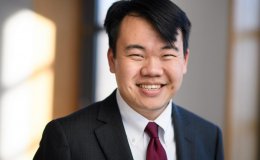
Kharis Templeman (祁凱立)
中文姓名:祁凱立
  • Home
  • Research
  • Teaching
  • CV
  • Blog
  • Taiwan Studies Resources

PTIP: The World's Most Dangerous Place? Assessing the Prospects for War and Peace in the Taiwan Strait

11/16/2023

0 Comments

 
On behalf of Taiwan in the Indo-Pacific Region and its National Security Task Force, the Hoover Institution held The World’s Most Dangerous Place? Assessing the Prospects for War and Peace in the Taiwan Strait on Tuesday, November 14, 2023 at 12:00 PM PT. 
​
In recent years, numerous analysts have warned of an increasing risk of war in the Taiwan Strait. Others, however, have argued that military conflict remains unlikely, and that the risk of war should not be over-hyped. Drawing from his recent book, Scott Kastner outlines a framework through which to assess the prospects for military conflict between China and Taiwan. Drawing on international relations theory, Kastner outlines several causal pathways through which a Taiwan Strait conflict could occur, and assesses how broad trends in China-Taiwan-US relations are affecting the likelihood of these different scenarios. He concludes with policy suggestions for how actors in Beijing, Taipei and Washington could mitigate the risks of a war in the Taiwan Strait.

About the Participants

Picture
Scott L. Kastner is a professor in the Department of Government and Politics at the University of Maryland, College Park. He graduated from Cornell University and received his Ph.D. in Political Science from the University of California, San Diego. His books include Political Conflict and Economic Interdependence across the Taiwan Strait and Beyond (Stanford University Press, 2009); China’s Strategic Multilateralism: Investing in Global Governance (Cambridge University Press, 2019; with Margaret Pearson and Chad Rector); and War and Peace in the Taiwan Strait (Columbia University Press, 2022).
​
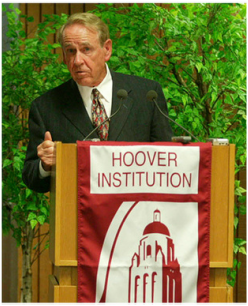
Kharis Templeman is a research fellow at the Hoover Institution and part of the Project on Taiwan in the Indo-Pacific. Templeman is a political scientist (Ph.D. 2012, Michigan) with research interests in Taiwan politics, democratization, elections and election management, party system development, and politics and security issues in Pacific Asia.

0 Comments

Stanford Democracy Day Event: Film Screening of Invisible Nation

11/3/2023

0 Comments

 
Picture
On November 2, the Project on Taiwan in the Indo-Pacific Region, the Center for East Asian Studies, and the Stanford Taiwan Science and Technology Hub co-sponsored a film screening of the documentary Invisible Nation, a poignant examination of Taiwan's contested status during the era of Tsai Ing-wen, the current President of the Republic of China (Taiwan). 

This Stanford Democracy Day 2023 event featured a Q&A with director Vanessa Hope and a pre-recorded introduction from Taiwan’s Digital Minister Audrey Tang.

Synopsis
With unprecedented access to Taiwan’s sitting head of state, director Vanessa Hope investigates the election and tenure of Tsai Ing-wen, the first female president of Taiwan. Thorough, incisive and bristling with tension, Invisible Nation is a living account of Tsai’s tightrope walk as she balances the hopes and dreams of her nation between the colossal geopolitical forces of the U.S. and China. Hope’s restrained observational style captures Tsai at work in her country’s vibrant democracy at home, while seeking full international recognition of Taiwan’s right to exist. At a time when Russia’s invasion of Ukraine has demonstrated the ever-present threat of authoritarian aggression, Invisible Nation brings punctual focus to the struggle of Taiwan as it fights for autonomy and freedom from fear.​​

Director Biography
Vanessa Hope is an award-winning producer and director. Vanessa has produced multiple acclaimed films in China including Berlin International Film Festival selection, Wang Quanan's The Story Of Ermei and Cannes Film Festival selection, Chantal Akerman's Tombee De Nuit Sur Shanghai, part of an omnibus of films, The State Of The World. She has also produced her own short films, including China In Three Words, an official selection at DOC NYC. Hope’s additional producing credits include Zeina Durra’s The Imperialists Are Still Alive! and Sarah and Emily Kunstler's feature documentary, William Kunstler: Disturbing The Universe and the award-winning film, Who We Are: A Chronicle of Racism in America. She served as Executive Producer of Paula James-Martinez’s Born Free.
Hope made her directorial debut with the documentary All Eyes and Ears, an exploration of the complex links between the U.S. and China told through the stories of U.S. Ambassador Jon Huntsman, his adopted daughter Gracie Mei, and civil advocate Chen Guangcheng. Hope’s latest film, Invisible Nation, is about the first female president of Taiwan, Tsai Ing-wen, and the story of Taiwan’s geopolitical predicament, with dangerous parallels to Ukraine. Vanessa and her husband, Ted Hope, share a company, Double Hope Films, with many independent fiction and documentary features and series in development. Vanessa is on the advisory board of the Equal Rights Amendment Coalition and the Fund for Women’s Equality.
0 Comments

PTIP: Deepening U.S.-Taiwan Cooperation Through Semiconductors

10/20/2023

0 Comments

 
Picture
On October 19, the Hoover Institution's Project on Taiwan in the Indo-Pacific Region held a joint event with National Tsing Hua University in Hsinchu, Taiwan, to discuss how to deepen U.S.-Taiwan cooperation in semiconductors.  

Taiwan is one of Asia’s most prosperous and successful liberal democracies, the world’s leading innovator in and producer of semiconductors, and a trusted partner in critical supply chains. While Taiwan stands at the center of the global semiconductor economy, its lack of diplomatic recognition and formal alliances contributes to its existential vulnerability to being invaded or otherwise involuntarily absorbed into the People’s Republic of China (PRC).

This event brought together participants from the Hoover Institution to discuss these issues with Taiwan counterparts, and to consider the recommendations of a new Hoover Institution report entitled “Silicon Shield: US- Silicon Triangle: The United States, Taiwan, China, and Global Semiconductor Security.” The report is available for free download at the project website. 

For more on this topic, see the Hoover Institution's Working Group on Semiconductors and the Security of the United States and Taiwan. Some of the report chapter authors have also participated in podcasts about the report, which you can listen to here: 

Matt Turpin, on mitigating China's non-market behavior in semiconductors
Chris Ford, on how the United States can reduce vulnerabilities in semiconductor supply chains 
Mary Kay Magistad, on the future of U.S.-China competition
Glenn Tiffert, on why China struggles to produce advanced semiconductors

In addition, in July 2023, the report's editors appeared in Washington DC for a launch event. 


Participants
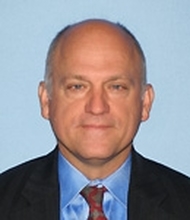
Terry Tsao is a seasoned executive and industry leader, currently serving as the Global Chief Marketing Officer and President of Taiwan at SEMI. In his current capacity, Terry Tsao assumes the responsibility of directing corporate marketing strategies of SEMI, encompassing various critical areas such as strategy formulation, association operations, product marketing, and market communications. Moreover, he leads the SEMI Market Intelligence Team, driving data-driven insights and actionable intelligence within the organization. In his leadership position for SEMI Taiwan, Tsao oversees all aspects of activity planning, product offerings, and service content. With over 16 years of experience at SEMI, Tsao has significantly advanced Taiwan's semiconductor community and spearheaded crucial policy initiatives within the global semiconductor industry. Prior to his current position, Tsao held dual roles as the President of SEMI Taiwan and the President of SEMI Southeast Asia, leveraging his extensive experience to drive advancements in the semiconductor industry across multiple regions.

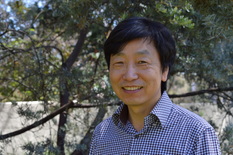
Tain-Jy Chen is a senior professor of economics at TSE, and also a professor emeritus of National Taiwan University. In addition to teaching, he has previously served as the president of Chung-Hua Institution for Economic Research, a think tank specializing in economic policy studies, and also in the Taiwan government, as the minister for Council for Economic Planning and Development (CEPD) and National Development Council (NDC). This experience gives him wide exposures to policy formations and implementations. As an economist, his research interests are in economic development and trade policies. He earned a Ph.D. degree in economics in 1983 from Pennsylvania State University. He has published extensively in academic journals, mostly in the fields of trade, investment, and industrial development. His recent work focuses on industrial development of China and the US-China trade war.

Kuo-Chun Yeh
is a professor at the Graduate Institute of National Development, a researcher at Center for China Studies, and Coordinator of China Research Program, National Taiwan University.  He is Secretary-general of the Chinese Association of Political Science (CAPS Taipei).  Since 2021 he has been an EU Jean Monnet Chair focusing on the EU-China industrial competition.

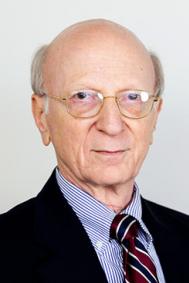
Burn-Jeng Lin is a Distinguished Senior Professor at National Tsing Hua University, a position he has held since retiring as Vice President of TSMC in 2016. He joined TSMC as a senior director in 2000 and became Vice President in 2011. Prior to that, he founded and led Linnovation, Inc. From 1970 to 1992, Dr. Lin worked at IBM, where he held various technical and managerial positions and was the first person to propose immersion lithography, a technique that eventually became viable in the 1980s. Dr. Lin is an IEEE Life Fellow and SPIE Fellow and was elected to the membership of the United States National Academy of Engineering in 2008 and as an Academician of Academia Sinica in 2014. He received a B.S. from National Taiwan University and his M.S. and Ph.D. in Electrical Engineering from Ohio State University.

FEATURING:
Larry Diamond - Senior Fellow at the Hoover Institution
James O. Ellis - Annenberg Distinguished Fellow at the Hoover Institution
Kharis Templeman - Research Fellow at the Hoover Institution
H.-S. Philip Wong - Willard R. and Inez Kerr Bell Professor in the School of Engineering at Stanford University

0 Comments

Stanford Student Job Opportunity: Hoover Student Fellowship Program

8/13/2023

0 Comments

 
Picture
Come work with me! The Hoover Project on Taiwan in the Indo-Pacific Region has an opening for a student research fellow for the 2023-24 academic year (Fall, Winter, Spring quarters) at Stanford.

​The Hoover Student Fellowship Program (HSFP) offers Stanford students a competitive opportunity to participate in important work at the Hoover Institution across both key research initiatives and organizational areas. The program is a 3-quarter-long paid fellowship in which students will be paired in topical areas of their preference with Hoover fellows or staff members.

Students in the fellowship will provide research and operational support, while also benefiting from mentorship and partaking in exclusive programming for the fellowship cohort. Students should expect not only guidance from their mentors and research supervisors, but also a chance to learn more about research, policy, and public affairs from influential leaders at Hoover and beyond. The fellowship will take place in-person throughout the academic year.

Applications due: Thursday, August 31, 2023 @ 11:59 PM.

Apply here. (You will need a valid Stanford email address to apply). Note that this is one of many possible research opportunities listed on the program website. The Taiwan project description is below: 

​Governing Taiwan: Making Democracy Work
The student fellow will provide research assistance on a book-length project to examine the evolution of Taiwan’s political institutions after its transition to democracy. The project seeks applicants with an interest in Taiwanese politics, East Asian Studies, political institutions, or the Taiwanese legal system. The successful candidate will have near-native reading proficiency in Chinese and some prior familiarity with Taiwan’s political history and institutions. A background in legal or political studies is a plus.
0 Comments

Book Talk: Divided Allies, with Hsiao-Ting Lin

5/30/2023

0 Comments

 
Picture
On behalf of Taiwan in the Indo-Pacific Region and its National Security Task Force the Hoover Institution invites you to a book talk on Divided Allies: Taiwan, the United States, and the Hidden History of the Cold War in Asia, with Hsiao-ting Lin on Thursday, June 1, 2023 from 4:00 - 5:00 PM PT.

Register here to attend this virtual talk. 
​
Professor Lin’s book explores the challenges which faced the United States and Taiwanese alliance during the Cold War, addressing a wide range of events and influences of the period between the 1950s and 1970s. Tackling seven main topics to outline the fluctuations of the U.S.–Taiwan relationship, this volume highlights the impact of the mainland counteroffensive, the offshore islands, Tibet, Taiwan’s secret operations in Asia, Taiwan’s Soviet and nuclear gambits, Chinese representation in the United Nations, and the Vietnam War. Utilizing multinational archival research, particularly the newly available materials from Taiwan and the United States, it reevaluates Taiwan’s foreign policy during the Cold War, revealing a pragmatic and opportunistic foreign policy disguised in nationalistic rhetoric.


Picture
About the Speaker
Hsiao-ting Lin is a research fellow and curator of the Modern China and Taiwan collection at the Hoover Institution, for which he collects material on China and Taiwan, as well as China-related materials in other East Asian countries. He holds a BA in political science from National Taiwan University (1994) and an MA in international law and diplomacy from National Chengchi University in Taiwan (1997). He received his DPhil in oriental studies in 2003 from the University of Oxford. He has published extensively on modern Chinese and Taiwanese politics, history, and ethnic minorities, including Accidental State: Chiang Kai-shek, the United States, and the Making of Taiwan (2016); Modern China’s Ethnic Frontiers: A Journey to the West (2011); and Tibet and Nationalist China’s Frontier: Intrigues and Ethnopolitics, 1928–49 (2006).

0 Comments

PTIP: Assessing the Prospects for War and Peace in the Taiwan Strait [Postponed due to speaker illness]

4/27/2023

0 Comments

 
Picture
[This talk was cancelled and will be rescheduled at a later date.]

On behalf of Taiwan in the Indo-Pacific Region and its National Security Task Force the Hoover Institution invites you to The World’s Most Dangerous Place? Assessing the Prospects for War and Peace in the Taiwan Strait on Thursday, May 4, 2023 at 12:00 PM PT. 
​
In recent years, numerous analysts have warned of an increasing risk of war in the Taiwan Strait. Others, however, have argued that military conflict remains unlikely, and that the risk of war should not be over-hyped. Drawing from his recent book, Scott Kastner outlines a framework through which to assess the prospects for military conflict between China and Taiwan. Drawing on international relations theory, Kastner outlines several causal pathways through which a Taiwan Strait conflict could occur, and assesses how broad trends in China-Taiwan-US relations are affecting the likelihood of these different scenarios. He concludes with policy suggestions for how actors in Beijing, Taipei and Washington could mitigate the risks of a war in the Taiwan Strait.

This talk will draw from Prof. Kastner's new book, entitled War and Peace in the Taiwan Strait, available from Columbia University Press, November 2022. 

Picture
Speaker Bio
Scott L. Kastner is a professor in the Department of Government and Politics at the University of Maryland, College Park. He graduated from Cornell University and received his Ph.D. in Political Science from the University of California, San Diego. His books include Political Conflict and Economic Interdependence across the Taiwan Strait and Beyond (Stanford University Press, 2009); China’s Strategic Multilateralism: Investing in Global Governance (Cambridge University Press, 2019; with Margaret Pearson and Chad Rector); and War and Peace in the Taiwan Strait (Columbia University Press, 2022).

0 Comments

PTIP: Semiconductors and Geo-technology: 'Know-how' is Power

3/6/2023

0 Comments

 
Picture
Join the Stanford Cyber Policy Center, together with the Program on Taiwan in the Indo-Pacific Region at the Hoover Institution, on Wednesday, March 8, from Noon–1 PM Pacific, for Semiconductors and Geo-technology: ‘Know-how’ is Power, a discussion with Dr. Chun-Yi Lee, Associate Professor in the School of Politics and International Relations, and Director of the Taiwan Studies Program, at the University of Nottingham. The session will be moderated by Charles Mok, visiting scholar at the Global Digital Policy Incubator (GDPi).

Geopolitics is conventionally understood as a struggle for power. The focus of geopolitical analysis is typically on states; power is understood in terms of states’ economic and military strength. In the era of globalisation, production relies on complex supply chains. While this paper focuses on the production of a hi-tech product—semiconductors—it argues more generally that technology production and supply chain ‘know how’ is implicated in geopolitical power. Through an elaboration of the concept of ‘geo-technology’, this paper argues that a consideration of technology production capacity (or ‘know-how’) can enrich conventional understandings of geopolitics.

The US, Taiwan and China play different roles in the global semiconductor manufacturing supply chain. The leading semiconductor designers are based in the US, while the Taiwan Semiconductor Manufacturing Company (TSMC) produces most of the world’s high-end chips. China, on the other hand, is an economic and manufacturing powerhouse, but remains at the low end of the manufacturing supply chain. This paper argues that the US and Taiwan have significant leverage in the production of semiconductors, granting them geopolitical power. It therefore asks if Taiwan, and the US, can use their technological 'know-how’ to gain further leverage in the geopolitical tug of war with China. Data of this paper will come from semi-constructed interviews in Taiwan and Japan, approximately twenty elite interviews from technology policy analysts, policy makers and high-skilled engineers, along with relevant policy analyses. The paper aims to explore the link between human talents in the semiconductor supply chain and geopolitics.

This session is part of the Winter Seminar Series, a series spanning January through March, hosted at the Cyber Policy Center with the Program on Democracy and the Internet. Sessions are in-person and virtual, with in-person attendance offered to Stanford affiliates only. Lunch is provided for in-person attendance. Registration is required. 

About the Speaker
Dr. Chun-Yi Lee is Associate Professor in the School of Politics and International Relations, and Director of the Taiwan Studies Program, at the University of Nottingham. Her first book, Taiwanese Business or Chinese Security Asset?, was published by Routledge in 2011. She is currently working on her second monograph, on semiconductor manufacturing and geopolitics. She is editor in chief of the on-line academic magazine, Taiwan Insight, and co-editor of the ‘Taiwan and World Affairs’ book series with Palgrave.
0 Comments

PTIP: Then What?: Assessing the Military Implications of Chinese Control of Taiwan

2/28/2023

0 Comments

 
On behalf of Taiwan in the Indo-Pacific Region and its National Security Task Force, the Hoover Institution invites you to a talk by Caitlin Talmadge, associate professor of Security Studies in the School of Foreign Service at Georgetown University, entitled Then What? Assessing the Military Implications of Chinese Control of Taiwan on Friday, March 3, 2023 from 12:00 - 1:15 pm PT. To attend, register at the event page. 
Picture
Talk Abstract
​The military implications of Chinese control of Taiwan are understudied. Chinese control of Taiwan would likely improve the military balance in China's favor because of unification's positive impact on Chinese submarine warfare and ocean surveillance capabilities. Basing Chinese submarine warfare assets on Taiwan would increase the vulnerability of U.S. surface forces to attack during a crisis, reduce the attrition rate of Chinese submarines during a war, and likely increase the number of submarine attack opportunities against U.S. surface combatants. Furthermore, placing hydrophone arrays off Taiwan's coasts for ocean surveillance would forge a critical missing link in China's kill chain for long-range attacks. This outcome could push the United States toward anti-satellite warfare that it might otherwise avoid, or it could force the U.S. Navy into narrower parts of the Philippine Sea. Finally, over the long term, if China were to develop a large fleet of truly quiet nuclear attack submarines and ballistic missile submarines, basing them on Taiwan would provide it with additional advantages. Specifically, such basing would enable China to both threaten Northeast Asian sea lanes of communication and strengthen its sea-based nuclear deterrent in ways that it is otherwise unlikely to be able to do. These findings have important implications for U.S. operational planning, policy, and grand strategy.

Picture
Speaker Bio
Caitlin Talmadge is associate professor of Security Studies in the School of Foreign Service at Georgetown University, as well as Senior Non-Resident Fellow in Foreign Policy at the Brookings Institution, and Research Affiliate in the Security Studies Program at the Massachusetts Institute of Technology. During fall 2022 she also holds the Kissinger Chair in Foreign Policy and International Relations at the United States Library of Congress.
 
Professor Talmadge’s research and teaching focus on deterrence and escalation, U.S. military operations and strategy, and security issues in Asia and the Persian Gulf. She is author of The Dictator’s Army: Battlefield Effectiveness in Authoritarian Regimes (Cornell, 2015), which Foreign Affairs named the Best Book in Security for 2016 and which won the 2017 Best Book Award from the International Security Studies Section of the International Studies Association. In addition, she is co-author of U.S. Defense Politics: The Origins of Security Policy (fourth edition, Routledge, 2021), and she is currently writing a book with Professor Brendan Green on nuclear escalation risk in the emerging deterrence environment.

0 Comments

PTIP: U.S. Cities and States in Taiwan's Quest for International Space

2/6/2023

0 Comments

 
​On behalf of Taiwan in the Indo-Pacific Region and its National Security Task Force, the Hoover Institution
invites you to US Cities and States in Taiwan’s Quest for International Space on Tuesday, February 7, 2023 from 4:00 pm - 5:15 pm PT. Register at the event page. 
Picture
Talk Abstract
While Taiwan’s struggles to retain its shrinking list of diplomatic allies are well documented, its attempts to strengthen its international position via paradiplomacy—formal diplomacy with states, cities, and other subnational governments—have received less attention. Taiwanese officials are adept at forging such paradiplomatic agreements, and Taiwan represents a disproportionately large share of instances of paradiplomacy involving US cities and states. This talk describes the primary forms that US-Taiwan subnational diplomacy has taken since the 1970s, the reasons why cities and states engage with Taiwan, and the ways in which US-Taiwan subnational diplomacy is being challenged by pressure from the PRC.
Picture
Speaker Bio
Sara Newland
 is assistant professor of government at Smith College. She received her Ph.D. from the University of California, Berkeley, and was a postdoctoral fellow at the Ash Center for Democratic Governance and Innovation at Harvard’s Kennedy School of Government. She conducts research on local governance in mainland China and Taiwan and on subnational diplomacy between the US, China, and Taiwan. Her work has been published in Governance, Pacific Review, China Quarterly, and the Journal of Political Science Education. She is a fellow in the Public Intellectuals Program of the National Committee on US-China Relations and a member of the US-Taiwan Next Generation Working Group.

0 Comments

PTIP: Representative Bi-khim Hsiao, on the Enduring U.S.-Taiwan Partnership

2/4/2023

0 Comments

 
Picture
On Friday, January 27, the Project on Taiwan in the Indo-Pacific at the Hoover Institution had the privilege of hosting Taiwan's representative to the United States, Bi-khim Hsiao (蕭美琴). Amb. Hsiao joined students, faculty, and staff for a 90-minute conversation and Q&A session. The event recording is now available on the project website, and below. 

About the Speaker
Bi-khim Hsiao assumed her position as Taiwan’s Representative to the United States in July 2020, after serving as a Senior Adviser to the President at the National Security Council of Taiwan. Representative Hsiao previously served four terms in the Taiwan Legislature, representing overseas citizens for the first term, and then the constituents of Taipei City and Hualien County through different terms. For many years she was ranking member of the Foreign Affairs and Defense Committee and previously the chair of the USA Caucus in the Legislative Yuan. 
Picture
0 Comments
<<Previous
Forward>>

    RSS Feed

    About Me

    I am a political scientist with research interests in democratization, elections and election management, parties and party system development, one-party dominance, and the links between domestic politics and external security issues. My regional expertise is in East Asia, with special focus on Taiwan.

    Posting on Bluesky @kharist.bsky.social

    Archives

    April 2026
    March 2026
    February 2026
    January 2026
    November 2025
    October 2025
    September 2025
    August 2025
    July 2025
    June 2025
    April 2025
    February 2025
    January 2025
    November 2024
    October 2024
    May 2024
    March 2024
    January 2024
    December 2023
    November 2023
    October 2023
    August 2023
    May 2023
    April 2023
    March 2023
    February 2023
    January 2023
    December 2022
    November 2022
    October 2022
    September 2022
    August 2022
    June 2022
    May 2022
    April 2022
    March 2022
    February 2022
    January 2022
    December 2021
    November 2021
    March 2021
    February 2021
    December 2020
    October 2020
    September 2020
    August 2020
    July 2020
    June 2020
    September 2019
    August 2019
    November 2018
    August 2018
    June 2018
    February 2018
    January 2018
    October 2017
    August 2017
    December 2016
    November 2016
    September 2016
    August 2016
    July 2016
    March 2016
    February 2016
    January 2016
    December 2015
    November 2015
    October 2015
    September 2015
    July 2015
    June 2015
    May 2015
    March 2015
    February 2015
    January 2015
    November 2014
    October 2014
    September 2014
    August 2014
    July 2014
    May 2014
    April 2014
    March 2014
    February 2014
    January 2014
    December 2013
    November 2013
    October 2013
    September 2013

    Categories

    All
    1992 Elections
    2008 Elections
    2012 Elections
    2014 Elections
    2016 Elections
    2020 Elections
    2022 Elections
    2024 Elections
    2026 Elections
    Aacs
    Aborigines
    Alex Tsai
    Alicia Wang
    Annette Lu
    Announcements
    Apsa
    Apsa Cgots
    Arthur P Wolf
    Artificial Intelligence
    Blog Meta
    Book Review
    Brookings Institution
    Campaign Regulation
    CCP
    CDDRL
    CEAS
    CEC
    Chang Ching Chung
    Chang Chun Hsiung
    Chang Jung-wei
    Chang Li-shan
    Chang Ming-ta
    Chang Sho-wen
    Chen Che-nan
    Chen Chien-nian
    Chen Chi Mai
    Chen Chin-te
    Chen Ding-nan
    Chen Fu-hai
    Cheng Chao-fang
    Cheng Cheng-ling
    Cheng Pao-ching
    Chen Kuang-fu
    Chen Kuan-ting
    Chen Ming-wen
    Chen Ou-pu
    Chen Shih Chung
    Chen Shih-chung
    Chen Shui Bian
    Chen Tsang-chiang
    Chen Wan-hui
    Chen Wei-chung
    Chen Ying
    Chen Yu-chen
    Chiang Chi Chen
    Chiang Chi-chen
    Chiang Ching Kuo
    Chiang Jui-hsiung
    Chiang-kai-shek
    Chiang Tsung-yuan
    Chiang Wan An
    Chiang Wan-an
    Chin Hui Chu
    Chou Chiang-chieh
    Chou Chun-mi
    Chou Hui-huang
    Chuang Suo Hang
    Chung Chia-pin
    Chung Tung-chin
    Citizen 1985
    Civil Society
    Conferences
    Control Yuan
    Council Of Grand Justices
    Cross-party-negotiating-committee
    Cross Strait Relations
    CSSTA
    Defense Spending
    Demography
    Developmental State
    Diplomacy
    Disinformation
    DPP
    DPP Policy Papers
    Eats
    Economic Security
    Economic Voting
    Electoral Geography
    Electoral Reform
    Electoral Systems Wonkery
    Energy Policy
    Eric Chu
    EU
    Europe Taiwan Relations
    Executive Yuan
    Fan Yun
    Fellowship
    FIMI
    Frank Hsieh
    Freddy Lim
    Frida Tsai
    Fu Kun Chi
    Fu Kun-chi
    Germany
    Han Kuo Yu
    Han Kuo-yu
    Hau Lung Bin
    Hau Pei Tsun
    Henry Rowen
    Ho Kan-ming
    Hoover Institution
    Housing
    Hou You Yi
    Hou You-yi
    Hsiao Bi Khim
    Hsiao Bi-khim
    Hsieh Fu-hung
    Hsieh Kuo Liang
    Hsieh Kuo-liang
    Hsieh Lung-chieh
    Hsieh Sam Chung
    Hsu Chen-wei
    Hsu Chih-jung
    Hsu Chung-hsin
    Hsu Hsin-ying
    Hsu Shu-hua
    Hsu Ting-chen
    Huang Chin-tao
    Huang Hong-cheng
    Huang Kuo Chang
    Huang Kuo-chang
    Huang Min-hui
    Huang Shan Shan
    Huang Shan-shan
    Huang Shih Ming
    Huang Shiou-fang
    Huang Wei-che
    Huang Yung-chin
    Human Rights
    Hung Hsiu Chu
    Hung Tzu Yung
    Hung Tzu-yung
    Influence Operations
    In Memoriam
    Internship
    James Soong
    Japan
    Jiang Yi Huah
    Job Market
    John Chiang
    John Wu
    Journal Of Democracy
    Judicial Yuan
    Kao Hung An
    Kao Hung-an
    Kawlo Iyun Pacidal
    Ker Chien Ming
    KMT
    Kmt History
    Ko Chih-en
    Kolas Yotaka
    Ko Wen Je
    Lai Ching Te
    Lai Ching-te
    Lai Feng-wei
    Lai Hsiang-ling
    Lee Chin-yung
    Lee Chun Yi
    Lee Chun-yi
    Lee Teng-hui
    Legal-wonkery
    Legislative Yuan
    Liang-kuo-shu
    Liang Su Jung
    Lien Chan
    Lii Wen
    Lin Chia-lung
    Lin Chih-chien
    Lin Fei-fan
    Lin Geng-ren
    Lin Hung Chih
    Lin Ming-chen
    Lin Tsung-hsien
    Lin Yang Kang
    Lin Zi Miao
    Lin Zi-miao
    Liu Chao-hao
    Liu Cheng-ying
    Liu Chien-kuo
    Liu Kuo Tsai
    Lo Chih Cheng
    Lu Hsiu Yi
    Lu Shiow-yen
    Martial Law
    Ma Vs Wang
    Ma Ying Jeou
    Media
    Media Freedom
    Min Kuo Tang
    Nationalism
    Natsa
    NCC
    New Power Party
    Nuclear Power
    Occupy LY
    Pingpuzu
    Political Economy
    Political Science
    PRC
    PTIP
    Publications
    Public Opinion
    Quality Of Democracy
    Ramon Myers
    Rao Ching-ling
    Recall Elections
    ROC Constitution
    Russia
    Saidai Tarovecahe
    Sean Lien
    Security Studies
    Semiconductor Industry
    Shen Hui-hung
    Shen Lyu Shun
    Simon Chang
    Song Kuo-ting
    South Korea
    Speaker Series
    Stanford
    Statistics
    Street Protests
    Su Ching-chuan
    Su Huan-chih
    Su Jia Chyuan
    Su Jia-chyuan
    Sunflower Movement
    Su Tseng-chang
    Taiwanese Economy
    Taiwan Journal Of Democracy
    Taiwan People's Party
    Taiwan Rural Front
    Taiwan Solidary Union
    Taiwan Studies
    Taiwan World Congress
    Terry Gou
    Testimony
    The Diplomat
    This Week In Taiwan
    Ting Shou Chung
    Tpp
    Trade Relations
    Trans Pacific Partnership
    Tsai Chi-chang
    Tsai Ing Wen
    Tsai Shih-ying
    Tsao Chi-hung
    Tsao Er-yuan
    Tseng Yung Chuan
    Tzu Chi
    Ukraine
    United Nations
    Uscc
    US Taiwan NextGen
    Us Taiwan Relations
    V-dem
    Wang Chien-hsien
    Wang Chung-ming
    Wang Huei-mei
    Wang Jin Pyng
    Wang Mei-hui
    Wan Mei-ling
    Wei Yao Kan
    Wellington Koo
    Weng Chang-liang
    Wild Lily Movement
    Wilson Center
    Wu Den Yi
    Wu Yung Hsiung
    Xi Jinping
    Yang Cheng-wu
    Yang Shi-chiu
    Yang Wen-ke
    Yang Yao
    Yao Eng-chi
    Yao Wen-chih
    Yosi Takun
    You Si-kun
    Yu Shyi Kun

    RSS Feed

Powered by Create your own unique website with customizable templates.